
Why Delaying Social Security Benefits Isn't Always The Best Decision
September 25, 2026 Author: Tess Downing, MBA, CFP®, Complete View Financial

A personalized approach leads to better, more confident choices.
Deciding when to claim Social Security is one of the most important—and often most debated—decisions in retirement planning. Conventional wisdom, supported by much of the academic research, suggests waiting until age 70 to maximize lifetime benefits. That conclusion is often based on a simple premise: every dollar received in the future is treated as equal to a dollar today, using a 0% (or very low) real discount rate.
In reality, that assumption can overlook how retirees actually experience risk, opportunity cost, spending, health, and personal preferences. A more realistic framework considers the return that could be earned on the assets used to bridge the delay, often around 4%–5% for a balanced portfolio, and then adjusts for the risks unique to the individual. The result is not a “one size fits all” answer. For some retirees, delaying may still be the right choice; for others, claiming earlier can be a rational and rewarding decision.
CVF's newsletter is based on the article by Derek Tharp, Ph.D., CFP, CLU, RICP, Lead Researcher at Kitces.com and Head of Innovation at Income Lab. In his full article, Tharp also walks through case study scenarios illustrating how different financial circumstances, longevity assumptions, spending needs, and risk factors can lead to very different Social Security claiming decisions.
Considerations for your personalized approach.
Why Traditional Analysis Favors Delaying
- Most models use expected value, assuming every dollar is worth the same regardless of when it is received.
- Using a 0% discount rate treats Social Security as essentially “risk-free,” while potentially overlooking the opportunity cost of using portfolio assets to fund the delay.
- This approach can overlook expected utility—the satisfaction or value an individual actually derives from an outcome.
- Personal circumstances matter. A recommendation that maximizes projected lifetime dollars may not necessarily maximize a retiree’s financial flexibility or quality of life.
Risk That Should Increase Your "Discount Rate"
- Mortality Risk: Dying before the breakeven point can reduce the value of delaying benefits.
- Sequence of Returns Risk: Higher portfolio withdrawals early in retirement can amplify the impact of poor market returns.
- Policy Risk: Future benefit reductions or tax changes could affect the value of delayed benefits.
- Regret Risk: The emotional impact of a decision can matter if the “wrong” outcome becomes clear only in hindsight.
- Health Span Risk: Delaying income may shift spending into later years when retirees have less ability to enjoy it.
- Behavioral / Underspending Risk: Some retirees are more comfortable spending Social Security income than drawing from investments, so delaying may contribute to underspending early in retirement.
The Sequence of Returns in Retirement
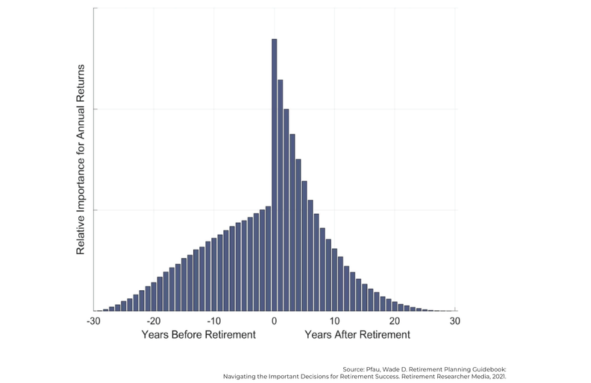
Sequence of returns risk is generally most significant in the early years of retirement. Delaying Social Security may require larger portfolio withdrawals during this vulnerable period, potentially magnifying the impact of poor early market returns.
Key Takeaways
- Sequence-of-returns risk is particularly important in the first several years of retirement.
- Delaying Social Security can increase portfolio withdrawals during this vulnerable period.
- Retirees with modest portfolios, health concerns, or a higher risk of underspending may find earlier claiming more appropriate.
- Retirees with substantial resources and lower sensitivity to these risks may still benefit from delaying until age 70.
- The optimal claiming age is not “one size fits all”—it should reflect the retiree’s resources, goals, longevity expectations, behavior, and risk tolerance.
Bottom Line
Rather than automatically assuming that delaying Social Security is best, you should evaluate the opportunity cost of waiting alongside the financial, behavioral, and personal risks involved. The goal is not simply to maximize projected lifetime benefits, but to choose a claiming strategy that supports financial security, flexibility, and quality of life.
Retire Confidently. Live Better. Leave a Legacy.